
Birds are fascinating creatures, each with unique features. The Northern Flicker is a standout bird.
Many birds look like the Northern Flicker. Some share its spots, while others have similar colors. These birds can confuse even the most experienced bird watchers. Knowing these lookalikes helps in identifying them correctly. This guide will introduce you to these birds.
You will learn what makes each one special. By the end, you will be better at spotting the differences. Get ready to explore the beauty of birds that resemble the Northern Flicker.
Introduction To Northern Flicker
Have you ever spotted a bird and wondered if it was a Northern Flicker? These fascinating birds are a common sight in North America, and their unique features make them stand out. In this post, we’ll explore what makes the Northern Flicker so special, focusing on their distinct features and common habitats.
Distinct Features
Northern Flickers are known for their striking appearance. They have a beautiful mix of brown and black feathers with a touch of red or yellow on their wings and tails. Their spotted bellies and crescent-shaped black bib on their chest are easy to recognize.
One feature that sets them apart is their slightly curved bill. This helps them dig into the ground for ants, their favorite food. Have you noticed the bright white rump patch when they fly? It’s a distinctive trait that makes them easy to identify in the wild.
Common Habitats
Where can you find Northern Flickers? They are adaptable birds and thrive in various environments. You might spot them in open woodlands, forest edges, and even your backyard.
I once saw a Northern Flicker pecking at the ground in a park near my home. They prefer areas with plenty of trees and open spaces. This makes suburban parks and rural areas ideal habitats.
Have you ever seen a Northern Flicker in your neighborhood? Their presence is a sign of a healthy, diverse ecosystem. Keep an eye out next time you’re enjoying nature, and you might just spot one of these beautiful birds.
American Kestrel
The American Kestrel, similar in color to the Northern Flicker, has striking plumage. It is the smallest falcon in North America.
If you’ve ever been captivated by the vibrant patterns of a Northern Flicker, you might find the American Kestrel just as fascinating. This small falcon, often mistaken for other birds due to its colorful plumage, is a treat for any birdwatcher. Let’s dive into what sets the American Kestrel apart.Physical Characteristics
The American Kestrel is relatively small, about the size of a mourning dove. It has a wingspan of around 20-24 inches and weighs between 3-6 ounces. The males are particularly striking with their rusty red back and blue-grey wings. Their underparts are pale with black spots, and they have two distinct black facial markings. The females, while still beautiful, have more subdued colors. They sport a rusty brown back and wings, with black barring. One time, while hiking, I spotted a male Kestrel perched on a high wire. The sun hit its feathers just right, and the colors were almost mesmerizing.Behavioral Traits
American Kestrels are known for their hovering flight. They can remain stationary in the air while hunting, a trait that makes them exceptional predators. They primarily hunt insects, small mammals, and birds. These falcons are also cavity nesters, often taking over old woodpecker holes. They are territorial and can be quite vocal, especially during the breeding season. Their call, a series of sharp “klee-klee-klee” sounds, is unmistakable. Have you ever heard their call in the wild? It’s a sound that once heard, you won’t easily forget. American Kestrels are migratory in northern parts of their range, moving to warmer areas during winter. However, in southern regions, they tend to stay year-round. The next time you’re out birdwatching, keep an eye out for these fascinating falcons. You might just spot one hovering in the sky or hear its distinct call echo through the trees. Have you seen an American Kestrel before? What was your experience like? Share in the comments below!Red-bellied Woodpecker
The Red-bellied Woodpecker is a fascinating bird, often mistaken for the Northern Flicker. Its striking appearance and unique behavior make it a captivating subject for bird enthusiasts.
Appearance Details
The Red-bellied Woodpecker has a distinct look. Its back displays a beautiful black and white barred pattern. This gives it a zebra-like appearance. The head of the male features a bright red crown. This color extends down to the nape. Female birds have red only on the nape and not the crown.
The belly of this woodpecker has a faint reddish tinge. This is where it gets its name. Despite its name, the red on the belly is not always easy to see. The wings are strong and designed for pecking wood. Its tail feathers are stiff, aiding in support while climbing trees. The beak is long and chisel-like, perfect for drilling into wood.
Geographical Distribution
The Red-bellied Woodpecker is commonly found in the eastern United States. It ranges from Florida to Canada. They inhabit deciduous forests, wooded suburbs, and parks. They prefer areas with mature trees. These birds are also seen in the southeastern regions of the U.S.
During winter, some Red-bellied Woodpeckers may migrate. They move to areas with abundant food sources. Their adaptability allows them to thrive in various habitats. They are often seen at bird feeders, especially those with suet. This makes them a favorite among backyard bird watchers.
Yellow-bellied Sapsucker
The Yellow-bellied Sapsucker resembles the Northern Flicker with its patterned feathers and similar size. Both species have striking plumage that makes them easy to spot.
If you’ve ever mistaken a Yellow-bellied Sapsucker for a Northern Flicker, you’re not alone. These two birds share several similarities, making it easy to confuse them. However, the Yellow-bellied Sapsucker stands out with its unique characteristics and behaviors. Let’s dive into what makes this bird special.Key Identifiers
The Yellow-bellied Sapsucker has distinct markings that help you identify it. Look for a red forehead and a black-and-white striped face. Its belly is, as the name suggests, yellowish. Unlike the Northern Flicker, which has a spotted belly, the Yellow-bellied Sapsucker’s belly is more uniformly colored. The back has a pattern of black and white bars, and the wings show a white stripe when folded. Have you ever noticed small holes in tree bark? That’s the work of a sapsucker. They drill rows of holes to feed on sap and insects. These holes are small, neat, and often arranged in horizontal rows.Seasonal Migration
Yellow-bellied Sapsuckers are migratory birds. They breed in the northern regions of North America, from Alaska to Newfoundland. In winter, they move south to the southeastern United States, Mexico, and Central America. You might wonder why they migrate. These birds follow their food sources. During breeding season, they rely on sap from trees in northern forests. In winter, they find sap and insects in warmer climates. Have you ever tracked bird migrations? It’s fascinating to see how far these tiny creatures travel. Understanding their migration patterns can help you spot them at different times of the year. Keep an eye out in your area during migration seasons; you might just catch a glimpse of one! These insights should help you distinguish the Yellow-bellied Sapsucker from the Northern Flicker. Next time you’re out birdwatching, take a closer look. You might be surprised at what you find.Gilded Flicker
The Gilded Flicker resembles the Northern Flicker with its spotted belly and barred back. This bird has a unique golden tint under its wings. Found in desert regions, it stands out with its bright yellow feathers.
The Gilded Flicker is a fascinating bird that often gets mistaken for the Northern Flicker due to their striking similarities. These birds share not only visual traits but also some habitat preferences. In this section, we will delve into the visual similarities and habitat preferences of the Gilded Flicker.Visual Similarities
At first glance, the Gilded Flicker and the Northern Flicker look almost identical. Both species feature a beautiful combination of brown and black barred plumage with a distinctive white rump. However, the Gilded Flicker has a more vibrant, golden-yellow underwing and tail feathers, setting it apart from its Northern cousin. The male Gilded Flicker also displays a red mustache stripe, an eye-catching detail that adds to its unique charm. Interestingly, I once mistook a Gilded Flicker for a Northern Flicker during a birdwatching trip. The subtle differences are easily overlooked if you’re not paying close attention. Have you ever experienced something similar? It’s a great reminder to take a closer look at the details!Habitat Preferences
The Gilded Flicker prefers warmer, arid regions. You’ll often find them in the southwestern United States and Mexico, particularly in desert areas. They thrive in habitats with cacti and open woodlands. In contrast, Northern Flickers are more adaptable and can be found in a variety of environments, from forests to suburban areas. This makes the Gilded Flicker’s habitat preference quite distinctive. If you’re hoping to spot a Gilded Flicker, head to the deserts of Arizona or the rocky landscapes of Baja California. The unique habitat choices of these birds make birdwatching an adventurous experience! Understanding these differences can enhance your birdwatching skills and make your next outing even more exciting. So, next time you’re out in the wild, will you be able to spot the subtle yet telling signs of a Gilded Flicker? Happy birdwatching!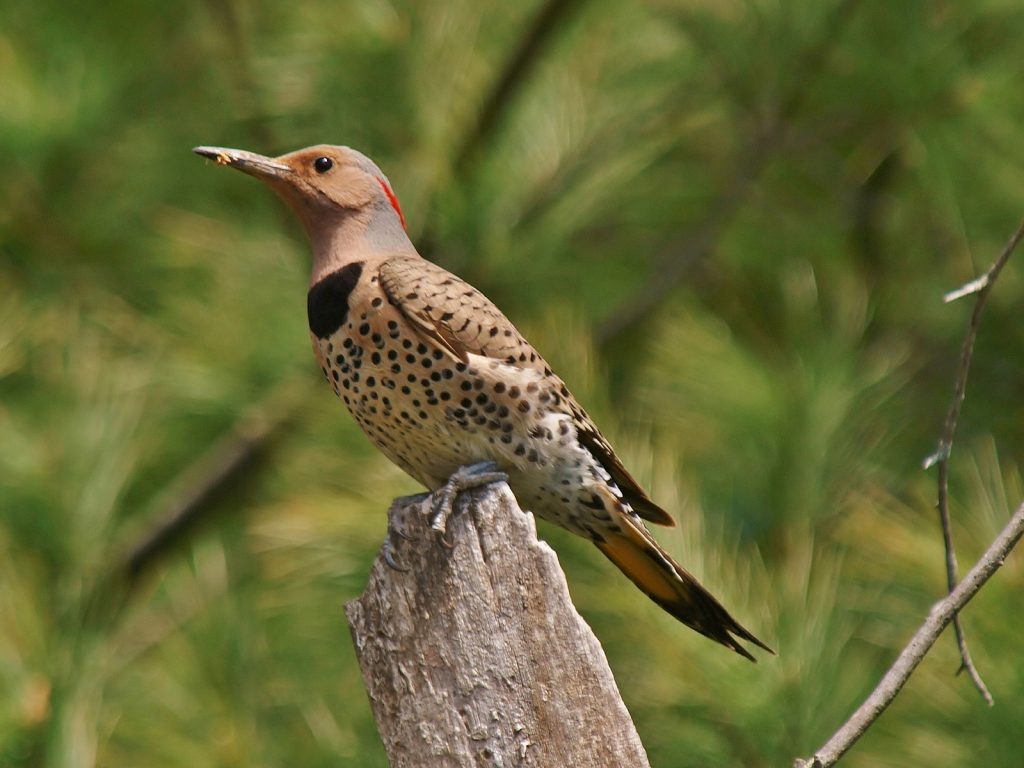
Credit: celebrateurbanbirds.org
Ladder-backed Woodpecker
The Ladder-backed Woodpecker is a fascinating bird often mistaken for the Northern Flicker. This small woodpecker sports distinctive markings and a lively personality. Bird watchers love spotting it in the wild, as it offers a unique sight and sound experience. Let’s dive into what makes the Ladder-backed Woodpecker special, starting with its color patterns and vocalizations.
Color Patterns
The Ladder-backed Woodpecker has striking color patterns. Its back features black and white stripes resembling a ladder, which gives the bird its name. The males have a red crown, while females have a black and white crown. This makes it easy to distinguish between the sexes.
The underparts are white with black spots, creating a speckled appearance. The wings also have black and white bars, blending well with the ladder-like pattern on the back. This bird’s vibrant and contrasting colors make it easy to spot in its natural habitat.
Vocalizations
The Ladder-backed Woodpecker has distinctive vocalizations. It makes a sharp, rattling call, which can be heard from a distance. This call helps it communicate with other woodpeckers and establish its territory.
Besides the rattling call, it also produces drumming sounds by pecking on trees. This drumming is not only for finding food but also for attracting mates. Its vocalizations and drumming patterns add to the charm of this delightful bird.
Northern Red-shafted Flicker
The Northern Red-shafted Flicker is a stunning bird. It belongs to the woodpecker family. This bird is known for its striking appearance. It shares many features with the Northern Flicker. Bird watchers often spot it in various regions across North America.
Distinctive Marks
The Northern Red-shafted Flicker has unique marks. It boasts vibrant red feathers under its wings and tail. These feathers are visible during flight. The bird has a brown body with black spots. Its face features a red mustache stripe. This stripe is a key identifier for males.
Regional Presence
The Northern Red-shafted Flicker is native to western North America. It thrives in diverse habitats. These include forests, woodlands, and urban areas. Bird watchers can spot them from Alaska to the central United States. The bird adapts well to different environments.

Credit: www.pinterest.com

Credit: www.allaboutbirds.org
Frequently Asked Questions
What Bird Looks Like A Northern Flicker?
The Yellow-shafted Flicker resembles the Northern Flicker. Both birds share similar size, shape, and coloration.
What Is The Difference Between Red-bellied And Northern Flicker?
The red-bellied woodpecker has a red cap and nape, while the Northern Flicker has a spotted belly and black bib.
How Rare Is It To See A Northern Flicker?
Northern Flickers are moderately common. They are often seen in wooded areas, parks, and gardens. Spotting one can be a delightful experience.
What Are The Variations Of The Northern Flicker?
Northern Flicker variations include the Yellow-shafted Flicker in the eastern and northern regions, and the Red-shafted Flicker in the west.
Conclusion
Finding birds that resemble the Northern Flicker can be fascinating. These birds share similar traits and colors. Observing them helps enhance birdwatching experiences. It also builds knowledge about different bird species. So, next time you spot a bird, look closely.
It might be a Northern Flicker or its look-alike. Happy birdwatching!
